
TIMELINE
08.2025 - 12.2025
ROLE
UI/UX Designer
TOOLS
Figma, Print
SPECTRA
OVERVIEW
AI Products in the year 2035
MY ROLE - UI/UX Designer
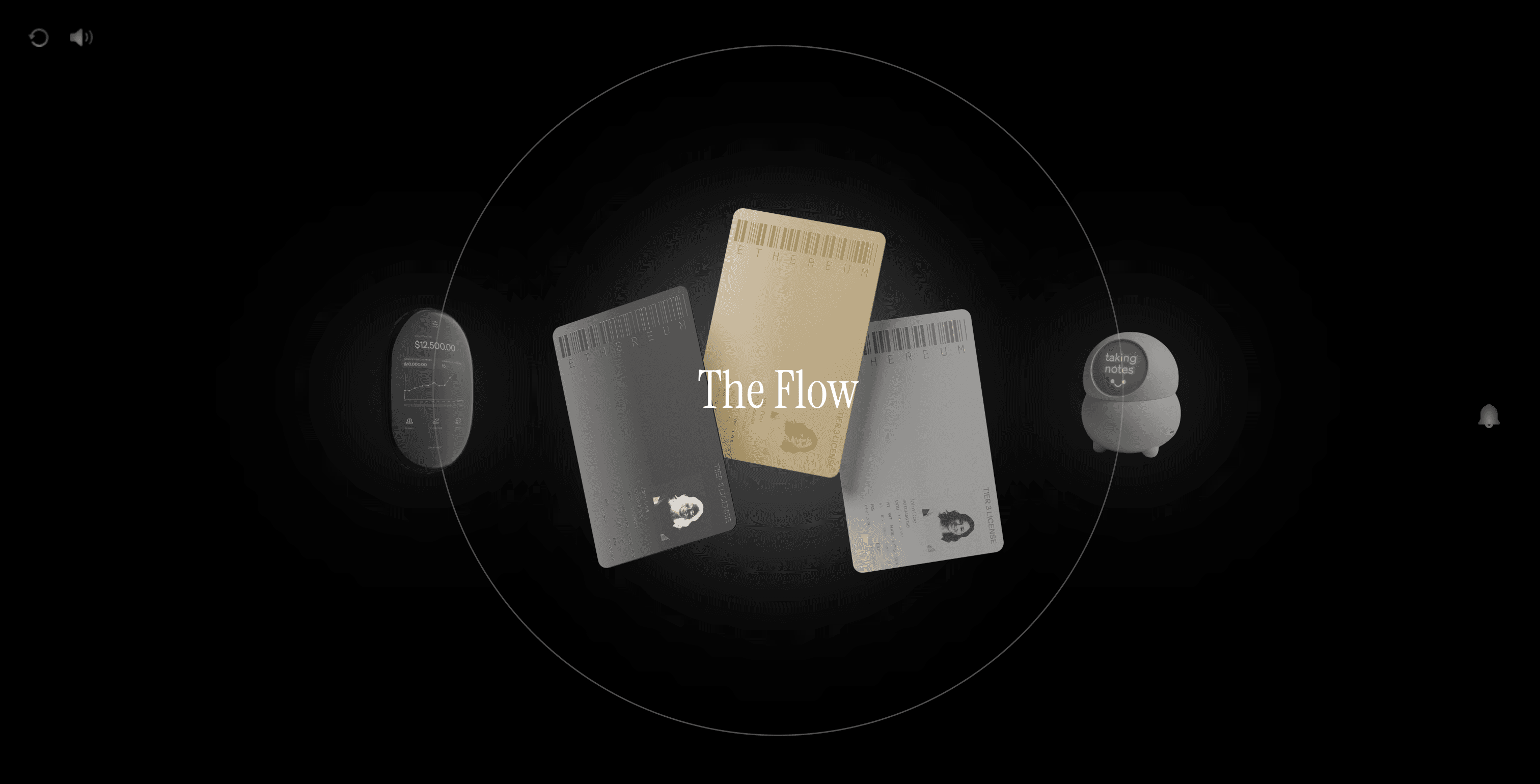
Spectra is an immersive web experience and in-person installation that explores future relationships between humans and AI through speculative design. I designed and curated the web experience and produced supporting print materials, including cards and posters.
Who it was for, and who did what
Spectra was a speculative design project at FCAT (Fidelity Center of Applied Technology) , built by a cross-disciplinary team across research, UX, visual design and technology. It ran as a live exhibit for people in the Fidelity office.
What I did
Designed and curated the web experience, from flows and wireframes to the final dashboard, chapter and results screens.
Designed the print materials: the event posters and the physical persona cards visitors took home.
What the team did
Research and future framing (including the STEEPLE framework), building the web experience, and producing the exhibit.



Research
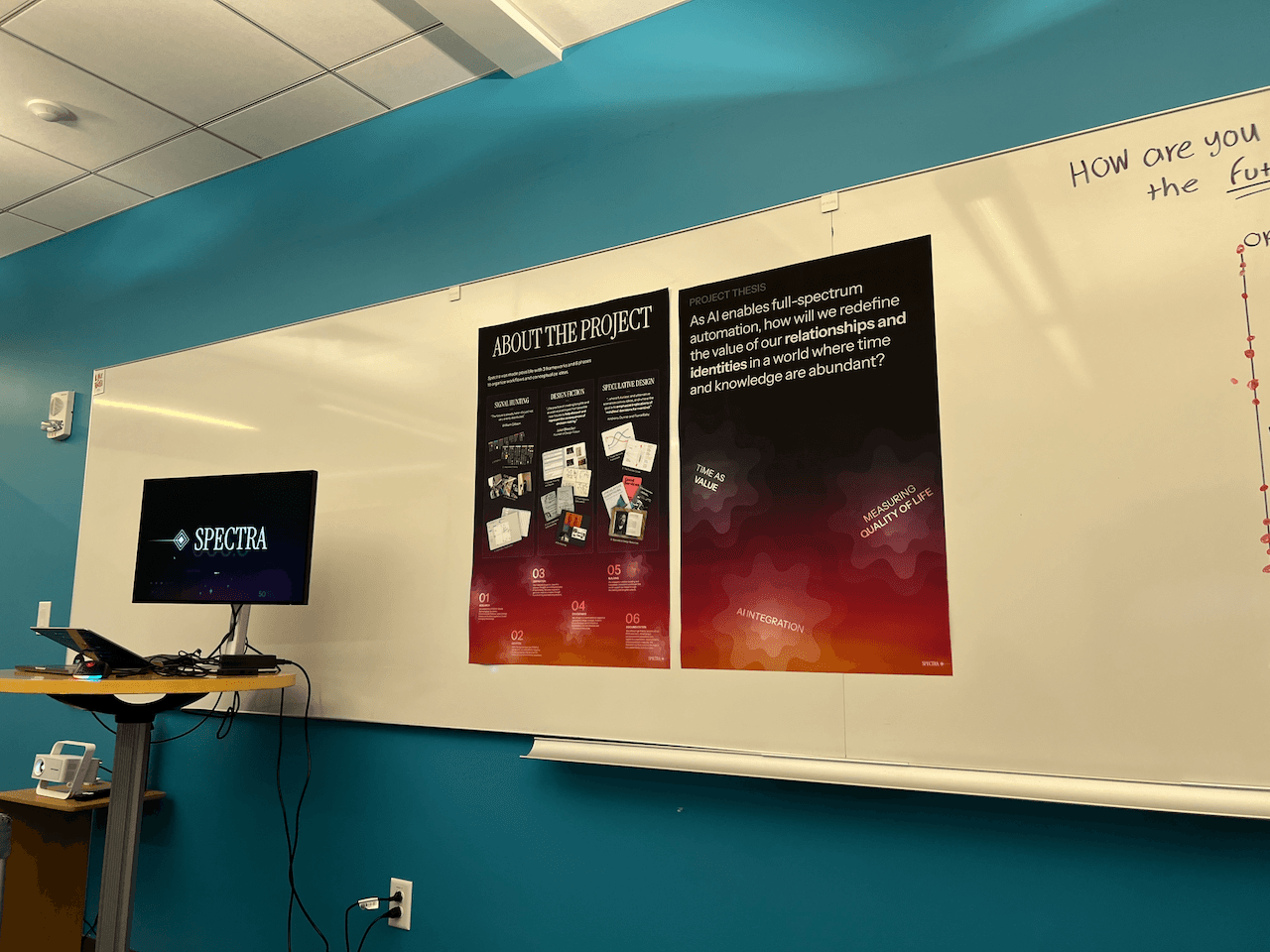
Spectra was made possible with 3 frameworks and 6 phases to organize workflows and conceptualize ideas.

Main Thesis
As AI enables full-spectrum automation, how will we redefine the value of our relationships and identities in a world where time and knowledge are abundant?

Concept Proposal
A web experience and interactive exhibit that prompts users to ponder the personal significance of human worth as the world becomes more automated.
Final Deliverables
We designed two connected pieces:
In-person exhibit
+
Web App


Flows and Wireframes
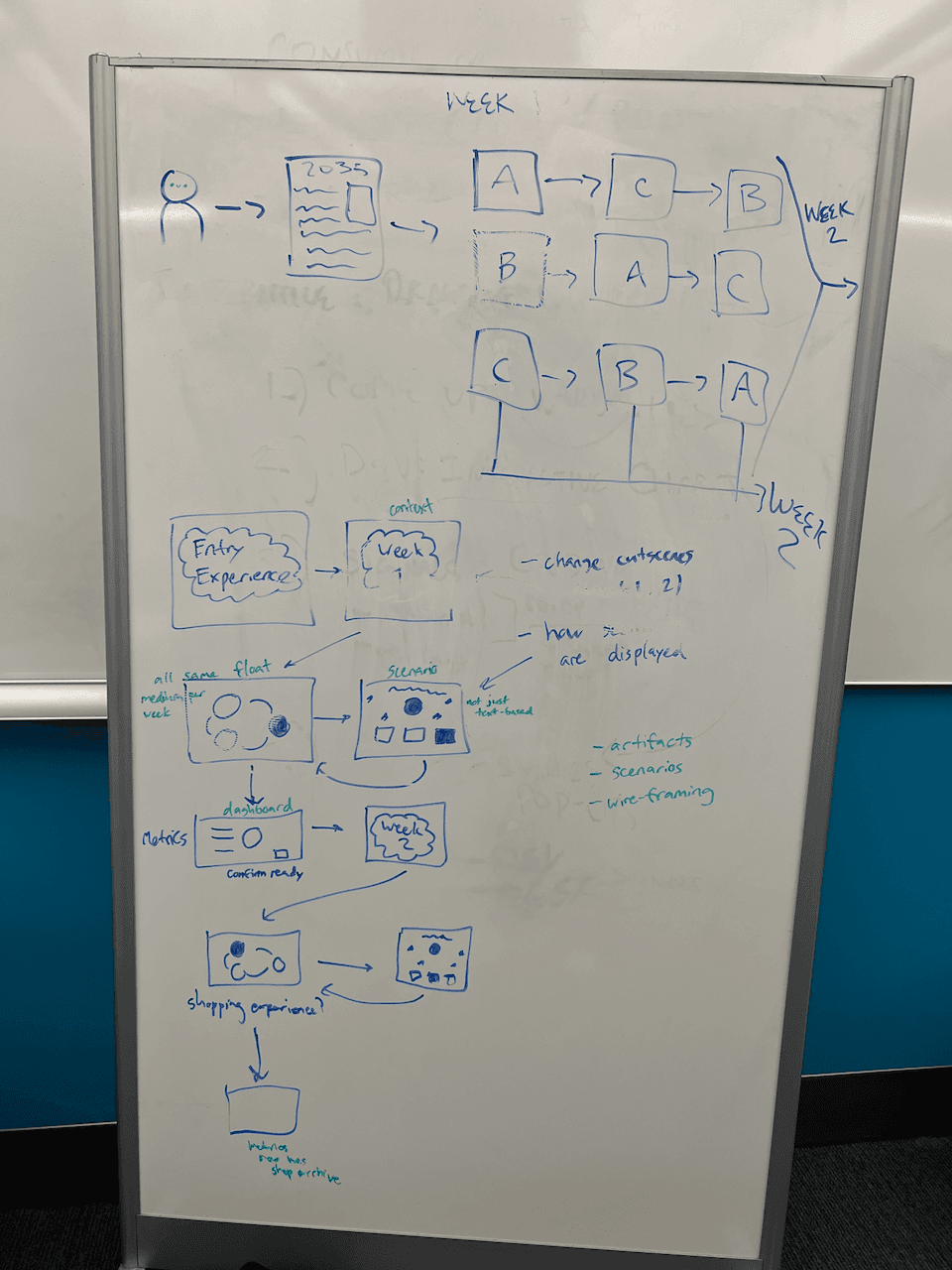
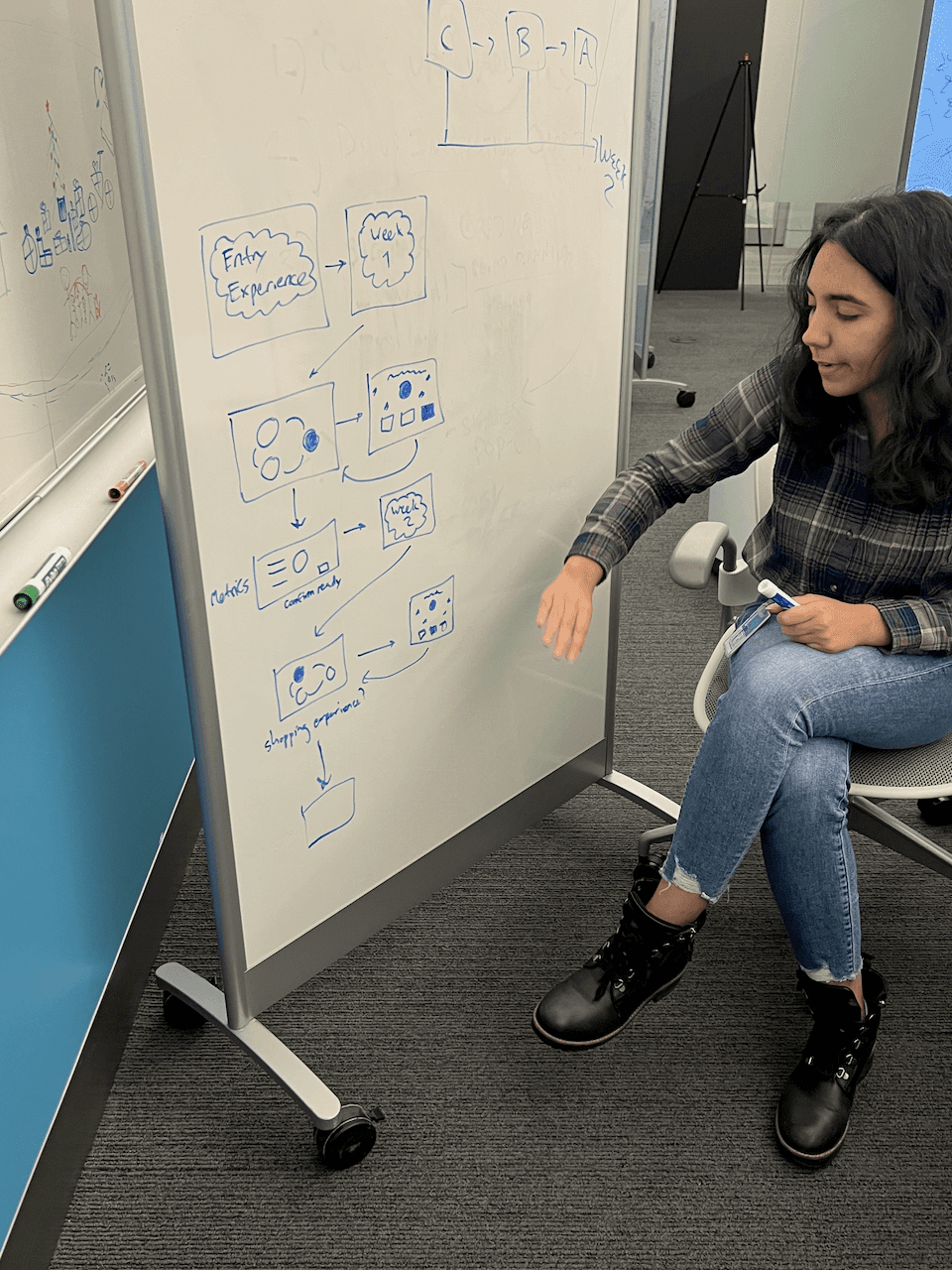
We spent significant time mapping out the web experience, defining its phases and exploring different AI use-case scenarios. We translated these flows into low-fidelity wireframes to establish the experience’s structure and interactions.
*due to NDA I could not take any lofi pictures with me
How Does the Web Experience work?


Screen breakdown
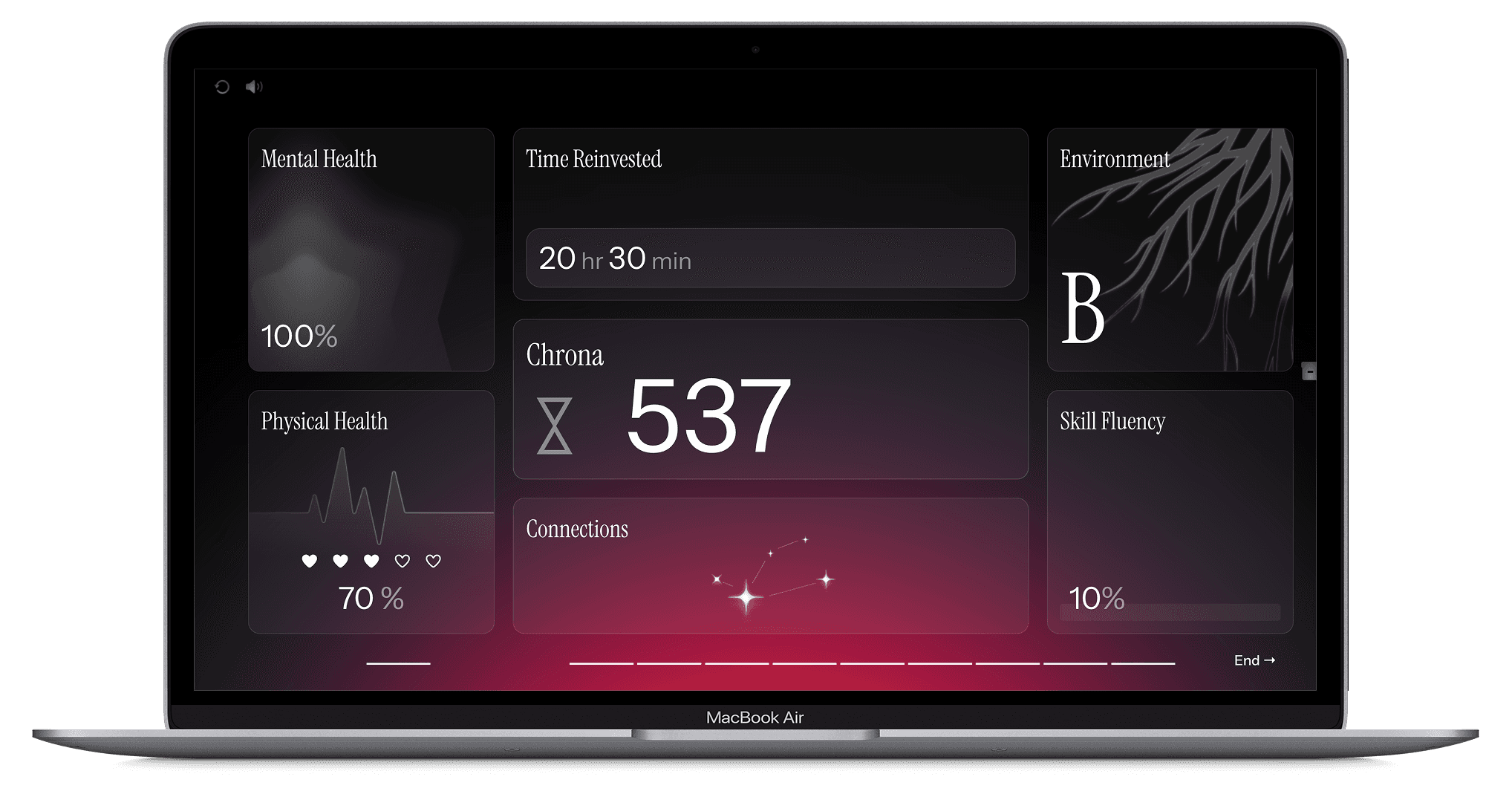
The three kinds of screens a visitor moves through, from the first chapter to their final Chrona score.
Dashboard Screens
The dashboard visualizes the user’s wellbeing, tracking how their choices shape their overall experience.
Chapter Screens
Each chapter guides users through a distinct set of scenarios, choices, and consequences that shape their experience.
Finishing Screens
The results reveal how the user’s wellbeing evolved over time and classify their experience based on their final Chrona score.
In-Person Installation + Marketing Materials
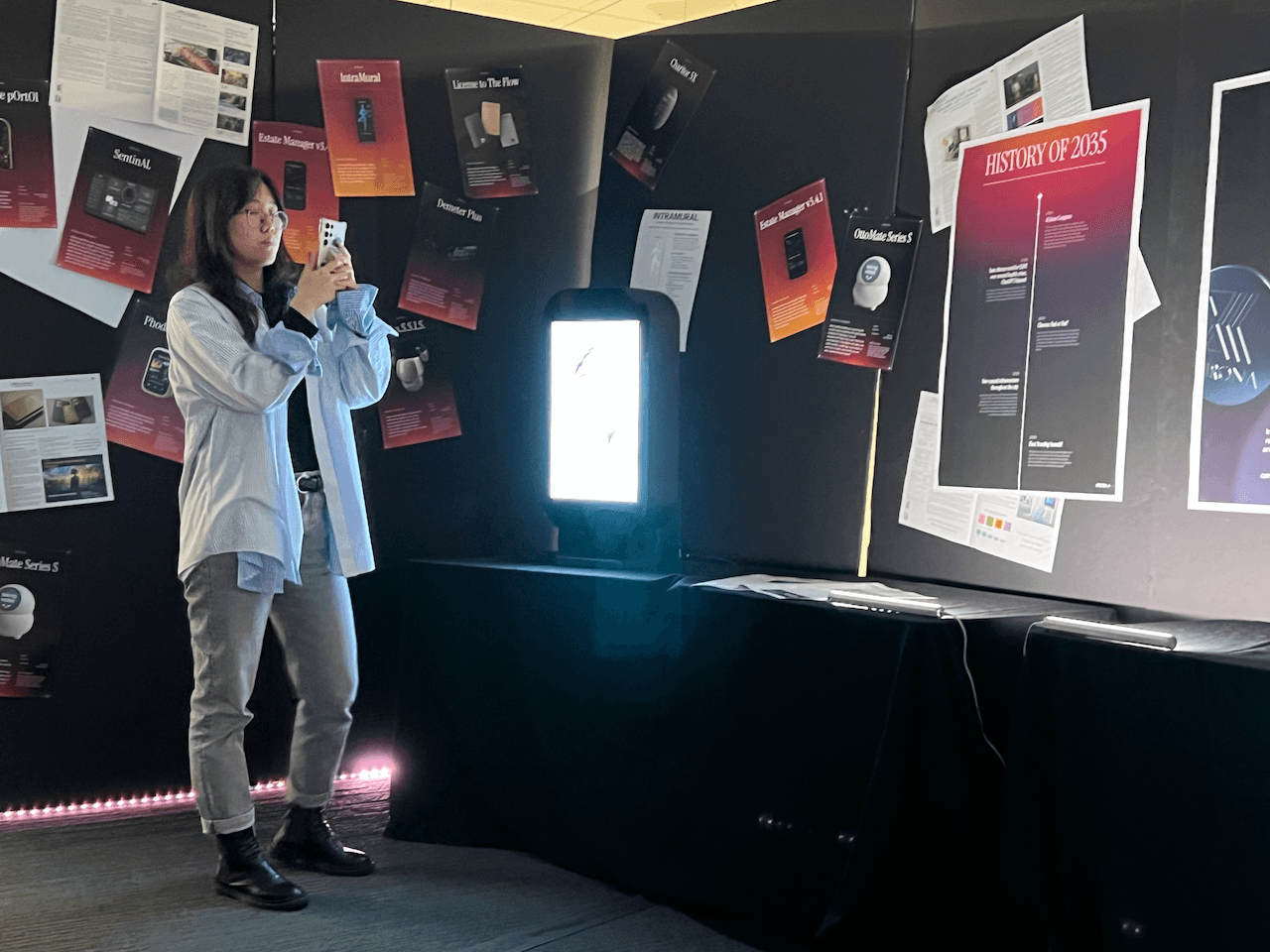
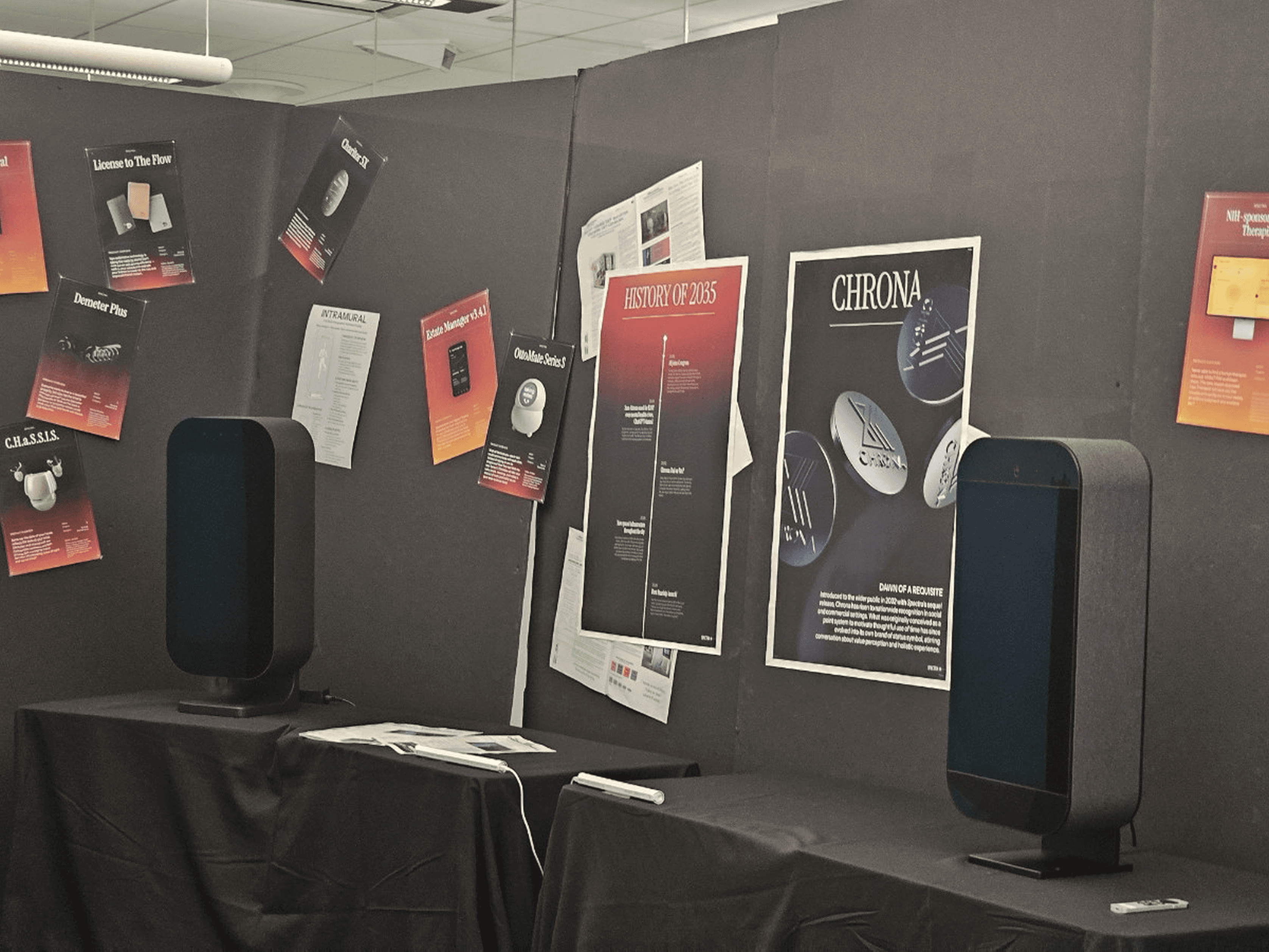
We wanted to make the web experience immersive, like the person would be transported to 2035, so we made posters to advertise the experience, and each person received a card that told them what their AI Persona would be.








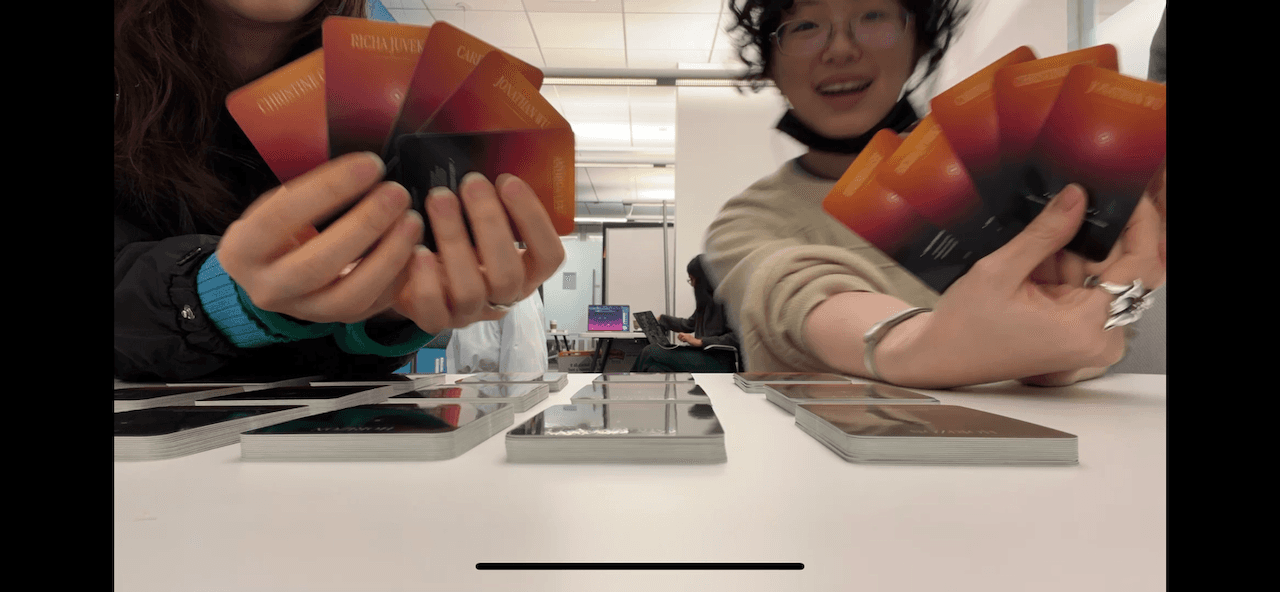
Personalization Cards
While playing the Web Experience, users will select answers to certain scenarios that will calculate into an AI "Persona"/benefit card. Once the user gets a persona they will receive a physical card detailing their persona and what their Chrona Score allows them to obtain. We allowed participants to keep it as a souvenir.

Outcome
Visitors played through the web experience, got a Chrona score and an AI persona, and left with a printed persona card to keep.
What happened
Spectra ran as a live exhibit in the Fidelity office. The exhibit was open to over 1000+ employees.
"I feel just a bit more pessimistic about the future" - Fidelity employee that played the experience.
How I’d measure success
Did visitors finish every chapter? Did they keep their persona card? Did they leave thinking differently about time and automation?
Next time I’d track completion in the web experience and ask one exit question at the exhibit to answer these.
View the full experience here!
Challenges & Takeaways
Successes
Turning 3 months of research into a tangible experience
Used the STEEPLE framework to break down a difficult-to-research future.
Learning how to Storytell
Translated research into scenarios, user choices, and consequences that made abstract ideas about AI more tangible.
Cross-disciplinary collaboration
Combined research, UX, visual design, and technology to turn a complex concept into both a digital and physical experience.
Constraints
The future isn't one outcome. We can't possibly accurately predict AI's effect on humans in 2035 but we can sure speculate!
We only got to put on this experience/exhibit for people in the Fidelity office. Given the opportunity, I would love to work on larger scale projects and put a lot more love into the design of the exhibit!
This project taught me how powerful speculative design can be as a tool for innovation. It has changed my perception of future technology as a series of possible paths shaped by human choices.


